From Research to Impact: Bringing Research and Politics Together
Veröffentlicht am
From Research to Impact: Bringing Research and Politics Together
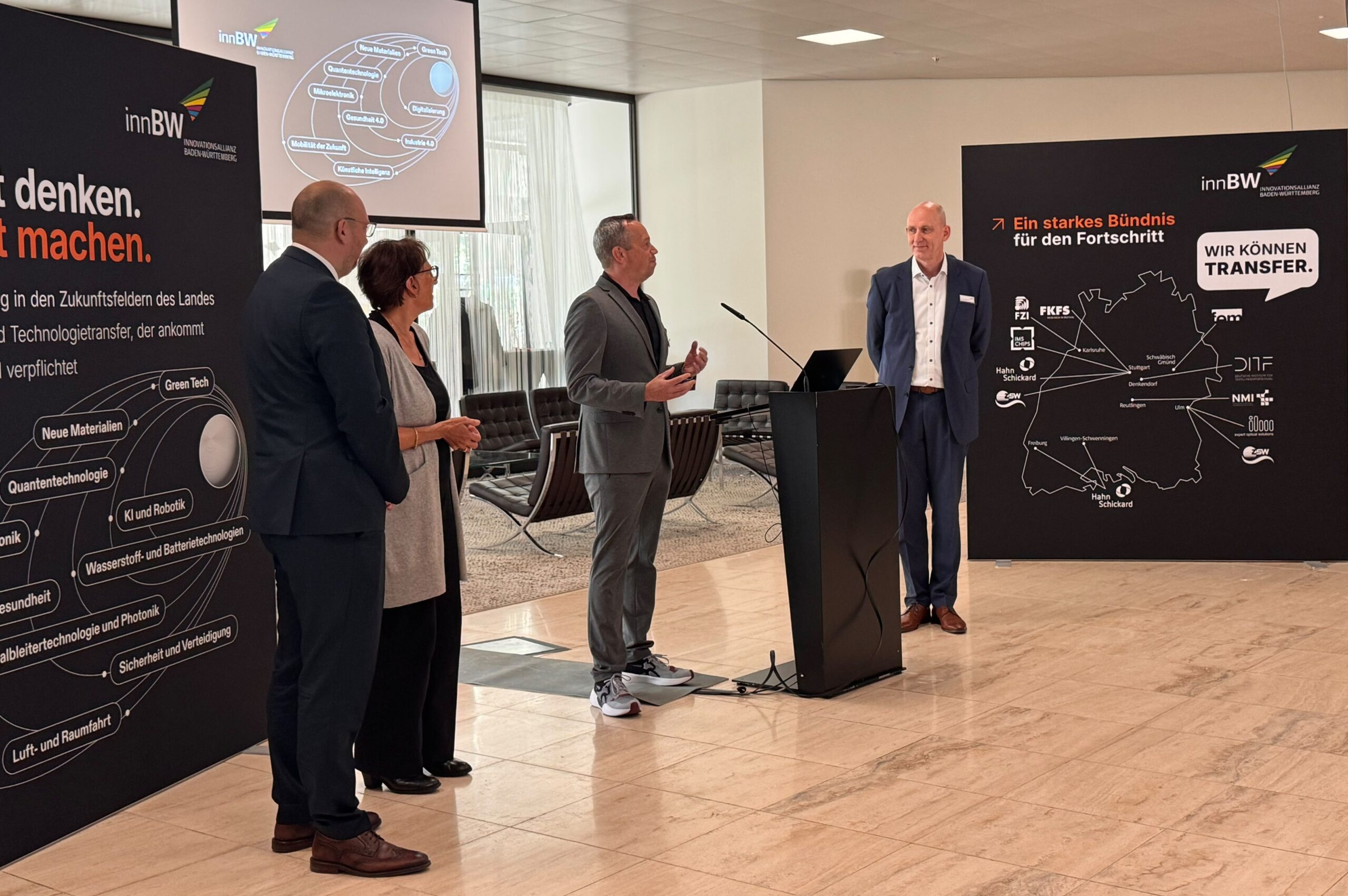
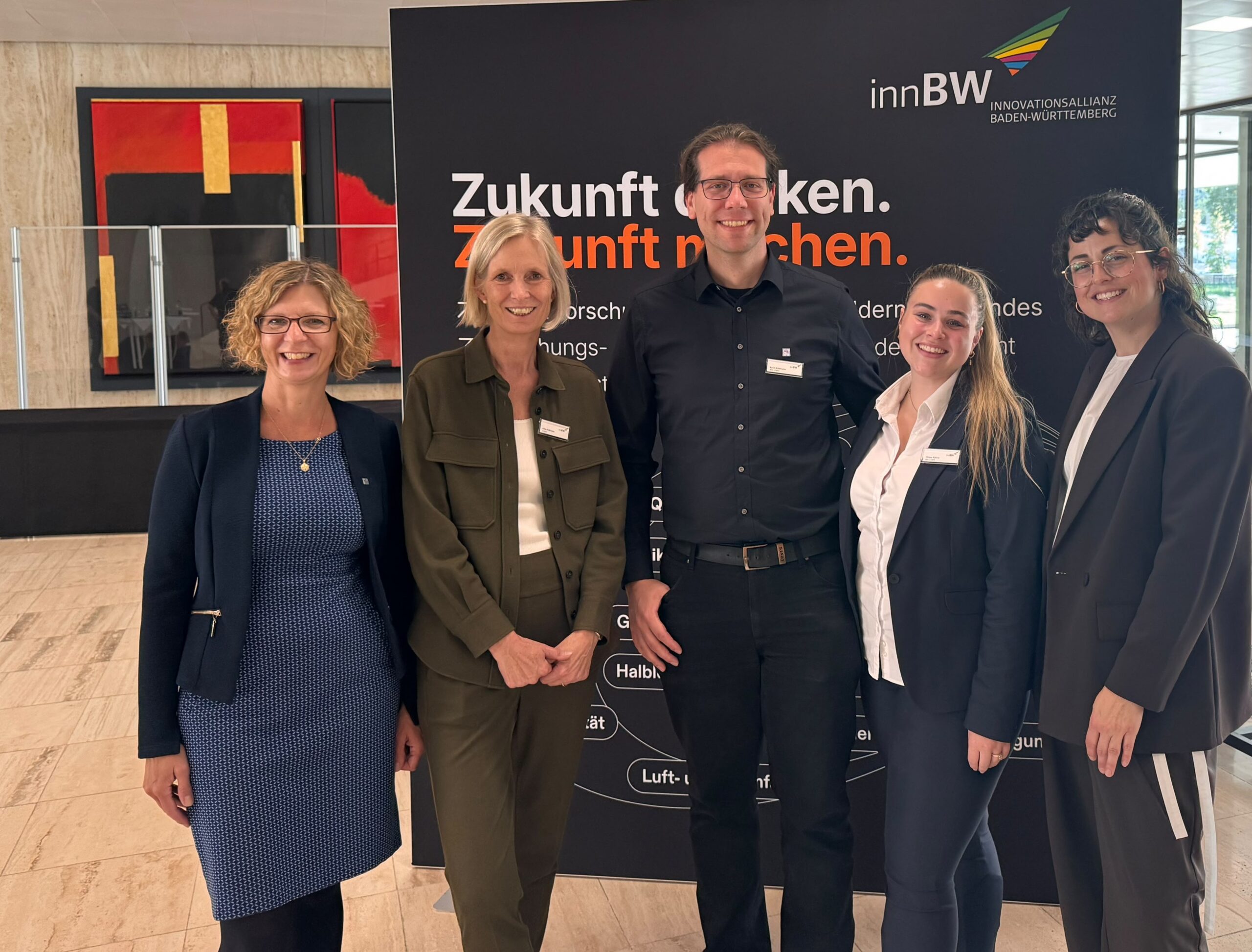
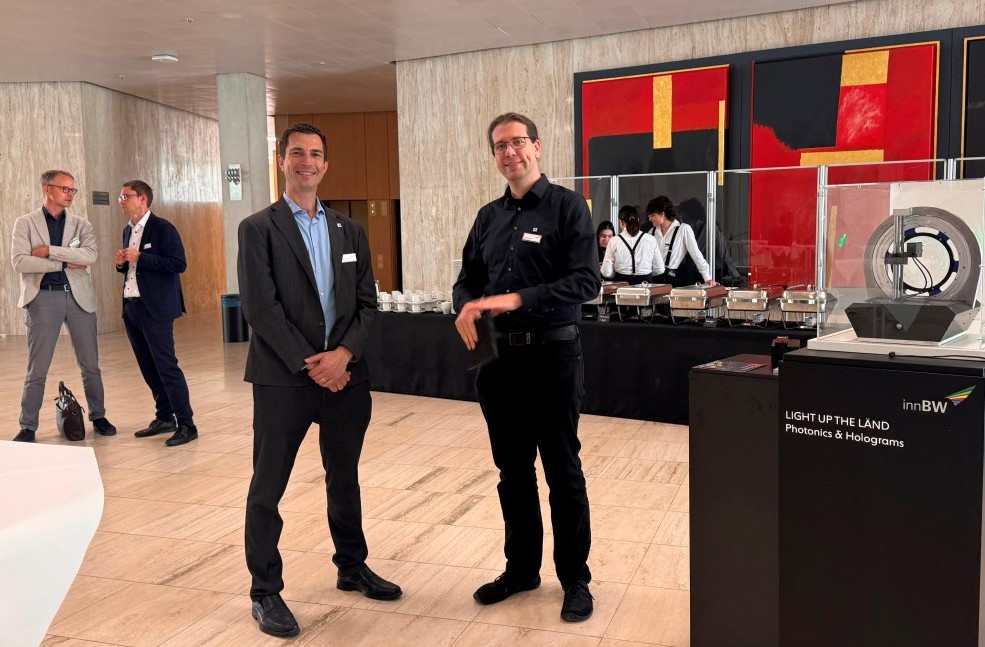
At the innBW State Parliament Lunch on September 23, the institutes of the Baden-Württemberg Innovation Alliance came together with members of the Baden-Württemberg State Parliament and representatives of the state government for direct dialogue. IMS CHIPS was represented by its institute directors, Prof. Dr. Niels Quack and Prof. Dr. Jens Anders.
Following welcoming remarks by Dr. Ute Leidig, Nicolas Fink, and Carl Christian Hirsch, Prof. Dr. Alfons Dehé, Chairman of innBW, provided insights into the work and role of the Baden-Württemberg Innovation Alliance.
Under the umbrella of innBW, eleven applied research institutes combine their expertise. Around 1,400 employees work to translate research into real-world applications and help companies, particularly small and medium-sized enterprises (SMEs), gain access to new technologies. The institutes are an integral part of Baden-Württemberg’s innovation ecosystem and serve as partners for research, technology transfer, and qualification in key fields of the future.
The State Parliament Lunch then focused on personal dialogue. For IMS CHIPS, the event provided an opportunity to engage with members of different parliamentary groups and representatives of the Ministry of Economic Affairs, Labour and Tourism on current challenges and opportunities in research, microelectronics, and technology transfer. We thank everyone involved for the open and constructive discussions and look forward to continuing several of these conversations in the future.
Special thanks go to innBW for the excellent organization and for regularly creating a platform that brings applied research and state policymakers together for direct exchange.
Would you like to learn more about innBW and the expertise of its eleven applied research institutes?
Research that makes an impact.
How does cutting-edge research create economic impact? How do new technologies move from laboratories and pilot facilities into companies – and how can small and medium-sized enterprises in particular benefit from innovation? This is precisely where the Baden-Württemberg Innovation Alliance (innBW) comes in.
Under the umbrella of innBW, eleven applied research institutes with 1,418 employees combine their expertise. Their shared mission is to translate research into applications, provide companies with access to expertise and advanced research infrastructure, and thereby strengthen innovation and value creation in Baden-Württemberg. The institutes are deeply embedded in the state’s innovation ecosystem and its regions, with a particular commitment to supporting SMEs.
The figures demonstrate the scale of this technology transfer: 5,513 industry contracts reflect direct collaboration with companies. 1,218 SMEs participated in 682 publicly funded projects. For every euro of base funding, the institutes generate €5.46 in revenue from publicly funded projects and industry contracts. Their track record also includes 758 industrial property rights and numerous spin-offs.
Their research and development activities address technologies that are critical to the future of Baden-Württemberg as a business and innovation hub. The innBW institutes work on areas including photonic chips for quantum applications, autonomous robotics for space exploration, electrolysis technologies, sustainable high-tech fibers, new materials for post-lithium batteries, and organ-on-chip systems for therapy development and personalized diagnostics. Cleanrooms, pilot facilities, laboratories, and pilot and small-series production capabilities provide the infrastructure needed to turn research into tangible technological solutions.
The economic impact is also reflected in the creation of new companies. Over the past ten years, 35 spin-offs have been established, creating around 500 jobs. One example is CYTENA, founded in 2014 and sold in 2019 for €30.25 million.
innBW therefore sees itself as an innovation partner for research, technology transfer, and qualification, as well as a bridge between science, industry, and policymakers. The alliance also contributes its expertise to strategic dialogues and key future fields across the state – from the automotive and healthcare sectors to hydrogen and other key technologies.
Its ambition is clear: Research should not end in the laboratory. It should find its way quickly and effectively into products, companies, and markets.
Because Baden-Württemberg’s capacity for innovation is determined not only by the ideas that emerge here, but also by how successfully those ideas are translated into real-world applications and economic value.
Would you like to learn more about innBW, its eleven member institutes, and their expertise?
Discover the Baden-Württemberg Innovation Alliance and its solutions for research and industry: About us – innBW