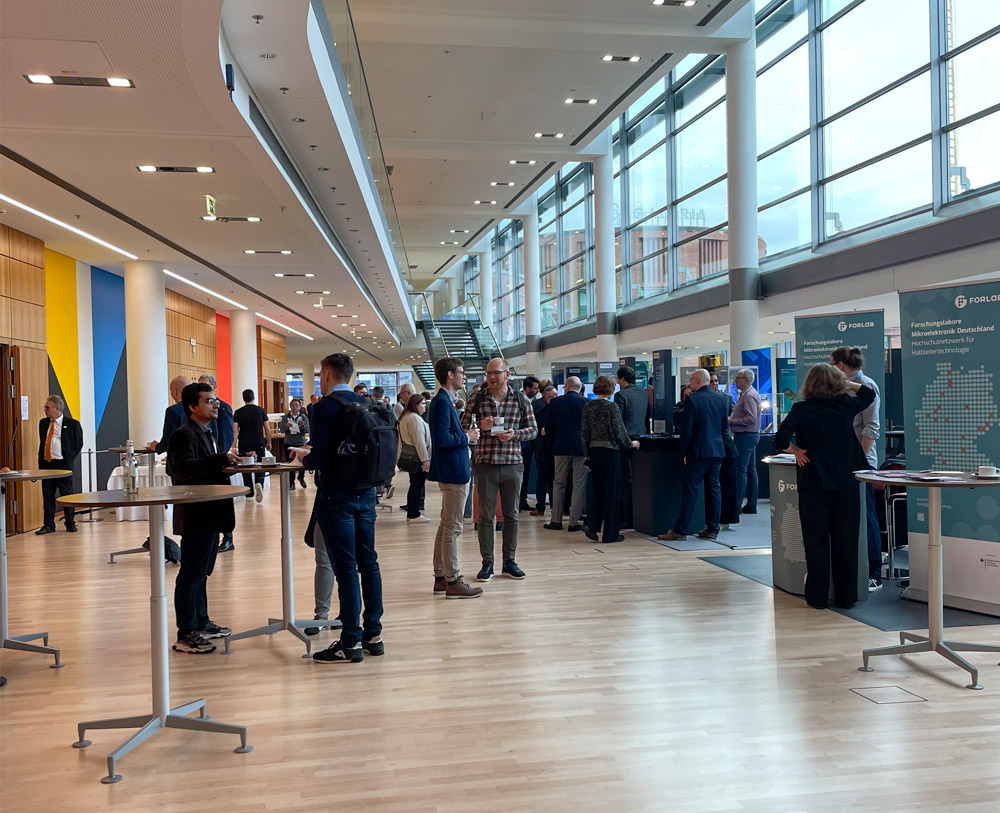
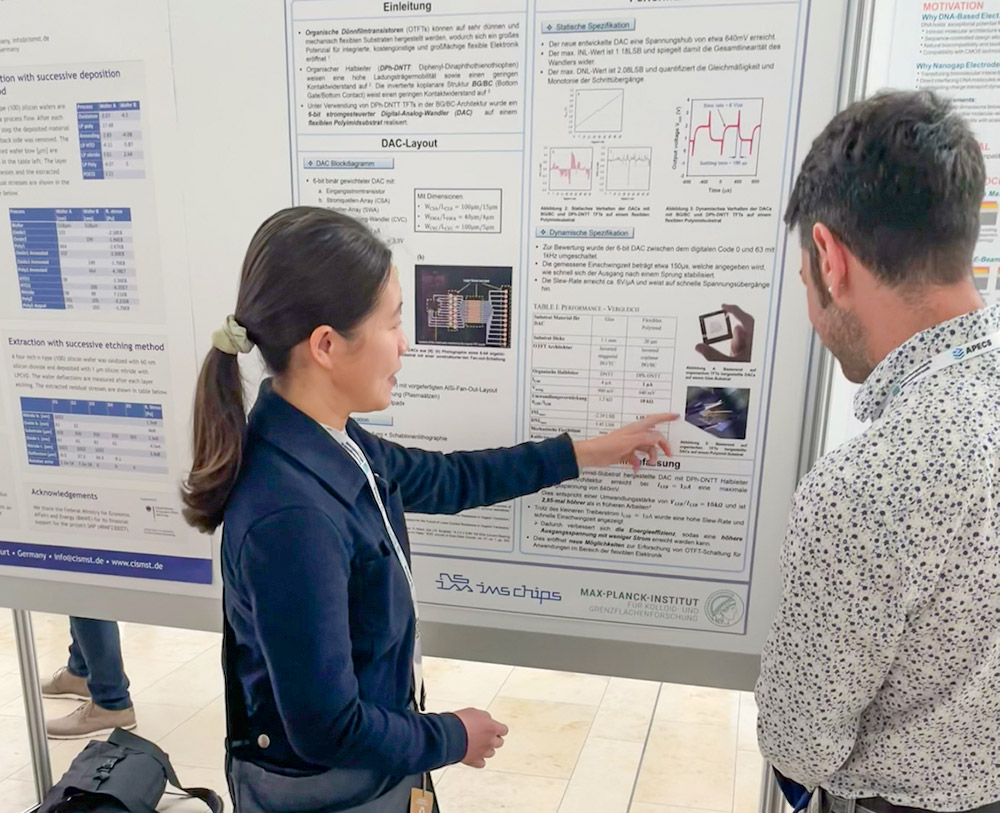
Last week, the MST Congress 2025 took place in Duisburg under the motto “Progress through Change” – and IMS CHIPS was there! Around 400 participants from science, industry, and politics gathered to discuss current developments in micro- and nanotechnology. Our colleagues Ulrike Passlack and Mengyao Li actively contributed to the discussions and shared insights from ongoing research.
The MicroSystemTechnology Congress takes place only every two years. What makes it so special?
Ulrike Passlack: The congress brings together about 400 participants from science, industry, and politics. It is one of Germany’s key platforms for presenting and discussing current research and developments in microsystems technology.
What contributions did IMS CHIPS present this year?
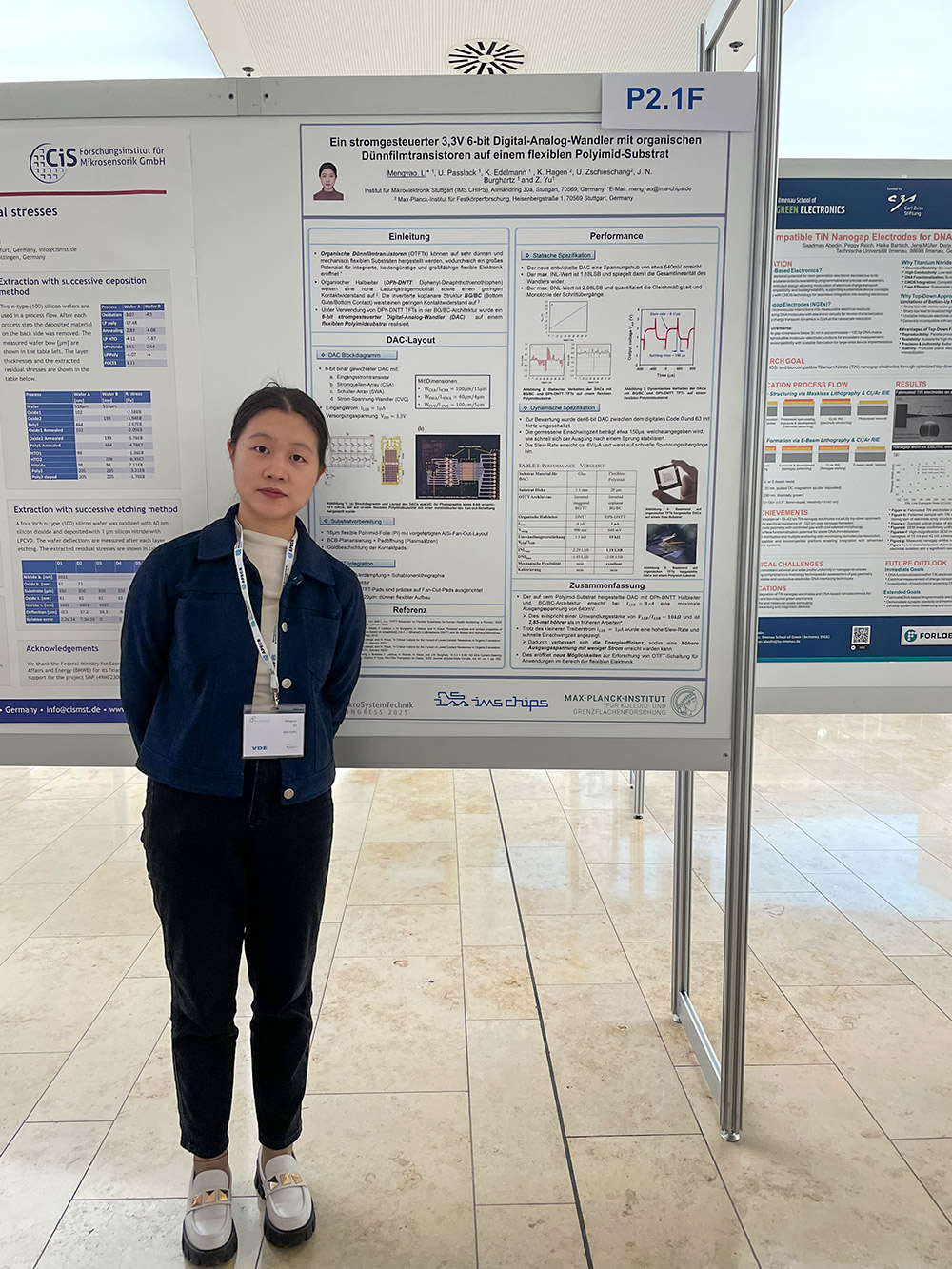
Mengyao Li: We contributed two presentations. I presented a poster titled “A 3.3V 6-bit Current-Steering Digital-to-Analog Converter Using Organic Thin-Film Transistors on a Flexible Polyimide Substrate.”
The results are based on our paper published in the IEEE Journal on Flexible Electronics in collaboration with the Max Planck Institute for Solid State Research. Co-authors include Ute Zschieschang, Hagen Klauk, Ulrike Passlack, Kevin Edelmann, and Joachim N. Burghartz.
Ulrike Passlack: I gave my talk “Chip Integration in Flexible & Stretchable Polymer Films: Technological Developments within the HyPerStripes Project” via live broadcast.
In the Assembly and Interconnection Technology track, I presented technological results from the EU project HyPerStripes, conducted together with Würth Elektronik, NanoWired GmbH, Fraunhofer EMFT, and OSYPKA AG. Together, we developed two medical applications – a neuroimplant and a catheter.
How was the experience of presenting online?
Ulrike Passlack: It was a very positive experience despite not being on site. The live session received excellent feedback, showing that our research resonates even remotely – a strong sign of the relevance of IMS CHIPS’ work for industrial applications.
And what were your impressions on site, Mengyao?
Mengyao Li: It was an inspiring conference. The discussions about the future of micro- and nanoelectronics were especially valuable and motivating – the growing interest in flexible and hybrid electronics was clearly visible.
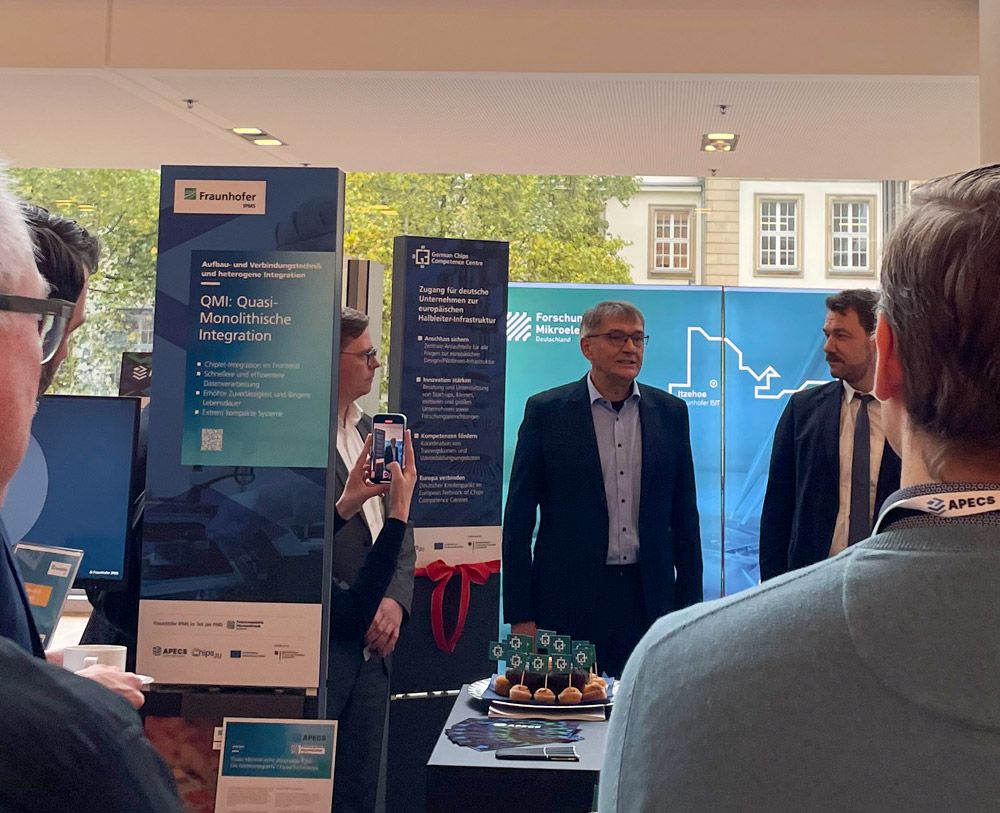
A key theme of the MST Congress 2025 was bridging research and industrial application. Many presented projects were part of the Fraunhofer network – with 14 Fraunhofer institutes, two Chemnitz institutes, and the Research Fab Microelectronics Germany (FMD).
Highlighted pilot line projects included:
- APECS – Advanced Packaging and Heterogeneous Integration
- NanoIC – Semiconductor Manufacturing for 2nm Technology
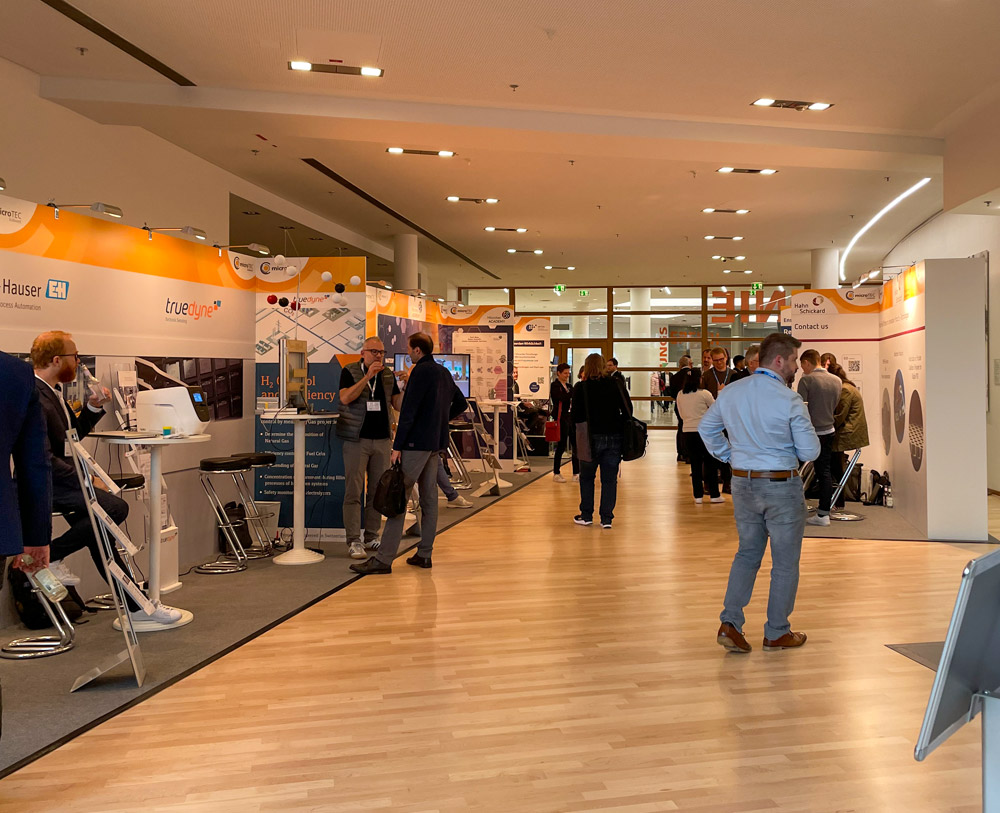
The event was highly application-oriented, attracting participants from Fraunhofer, Hahn-Schickard, IMEC, and Bosch.
Is there something else you would like to tell the audience?
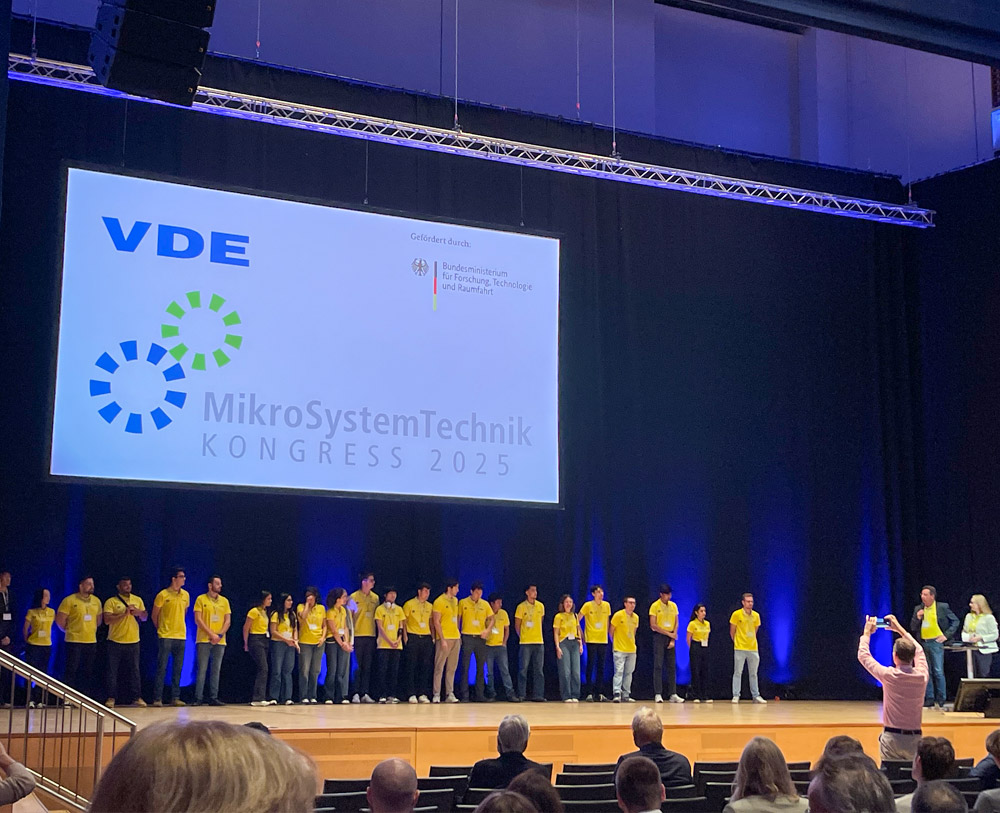
Another highlight was the COSIMA Competition (Competition of Students in Microsystems Applications), where students presented innovative ideas for microsystem applications – an inspiring glimpse into the next generation of microelectronic developments.
Link: COSIMA – VDE
The MST Congress 2025 offered exciting insights into current research and development projects in micro- and nanoelectronics.
We thank Ulrike Passlack and Mengyao Li for their dedicated efforts and for representing IMS CHIPS at this important event!